To do this, we work with an array of program partners who seek to transform communities and achieve sustainable impact in the areas of child and maternal health, education, youth development, nutrition and child welfare.
B'more for Healthy Babies

B'more for Healthy Babies (BHB) is a citywide initiative, led by the Baltimore City Health Department (BCHD) with the support of Family League and HealthCare Access Maryland, to reduce infant mortality and improve the health of mothers and babies. Family League serves as the co-lead with BCHD for the home-visiting strategy and BHB Communities, an initiative focused on the Upton/Druid Heights and Patterson Park North and East neighborhoods, and School Readiness.
Food Access

Family League has been dedicated to increasing food security for Baltimore residents through various initiatives, including afterschool meals, the Baltimore Partnership to End Childhood Hunger, and the Family Childcare Program. Despite the efforts of diverse stakeholders, the prevalence of Healthy Food Priority Areas presents challenges that federal and supplemental meal programs alone cannot address. Sustainable, community-led solutions are essential for supporting the economic self-sufficiency of families and improving social determinants of health.
School Readiness — Early Childhood Advisory Council
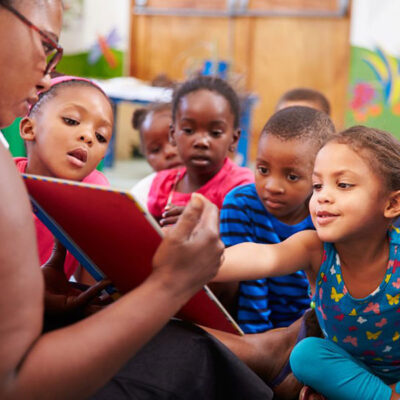
Family League of Baltimore serves as a co-lead — along with Baltimore City Public Schools and the Baltimore City Child Care Coalition — for the School Readiness Coalition, which now serves as the city's Early Childhood Advisory Council (ECAC). As the ECAC, the coalition is recognized by the Maryland State Department of Education as the single early childhood body in the city responsible for conducting regular needs assessments of the quality and availability of early childhood programs, increasing participation in existing programs, and leading local family engagement efforts.
Community Schools & Out-of-School Time

Family League of Baltimore serves as a facilitating partner for the Community School strategy in partnership with Baltimore City Public Schools, the Mayor's Office and Baltimore City Council. The strategy is composed of two critical components: Community Schools and Out-of-School Time programs. A Community School is a place and a set of strategic partnerships that promote student achievement, positive conditions for learning, and the well-being of families and communities. Out-of-School Time (OST) programs provide students with the opportunity to explore new ideas, build 21st century skills, find new talents, and experience success.
Community is resilient, brilliant, and beautiful and can put forth community-based solutions that work. — Khalilah Slater Harrington, Chief Program Officer
Expanded Youth Programs
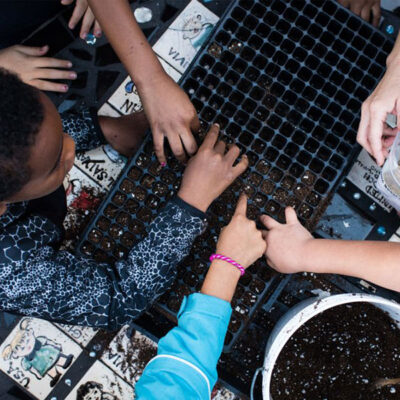
Family League of Baltimore, in partnership with the Mayor and City Council of Baltimore, is committed to supporting students through a collective effort to surround them with opportunities for success and to remove barriers that keep them from attending school regularly. Expanded Youth Programs offer comprehensive and single-focused Out-of-School Time (OST) programming to young people of all ages (school age up to age 24) in Baltimore City community locations. These diverse programs, led by community-based organizations, aim to improve outcomes for young people in underserved communities.
Interagency Initiatives
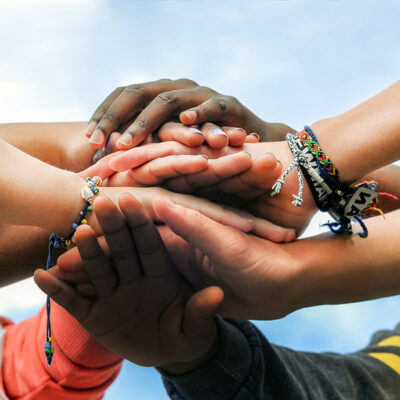
Family League partners with public agencies and human service organizations to establish aligned systems of care and coordinated service delivery for children and families across multiple systems including social services, juvenile justice, mental health, education, law enforcement, and housing. Working closely with citywide agencies, Family League supports the implementation of evidence-based practices reflective of local and national best practices.
Essential interagency initiative functions include:
- Provision of significant oversight and support to collaborative efforts that support Baltimore's child welfare system and other human-services-related work.
- Provision of expert consultation and guidance in areas of child welfare and juvenile justice.
- Coordination of research and data evaluation of both existing and proposed programs for efficacy and feasibility.
- Convening and facilitation of targeted workshops, trainings, and technical assistance for both partners and the community.
- Developing and maintaining strong working relationships with agency stakeholders.